


- 5
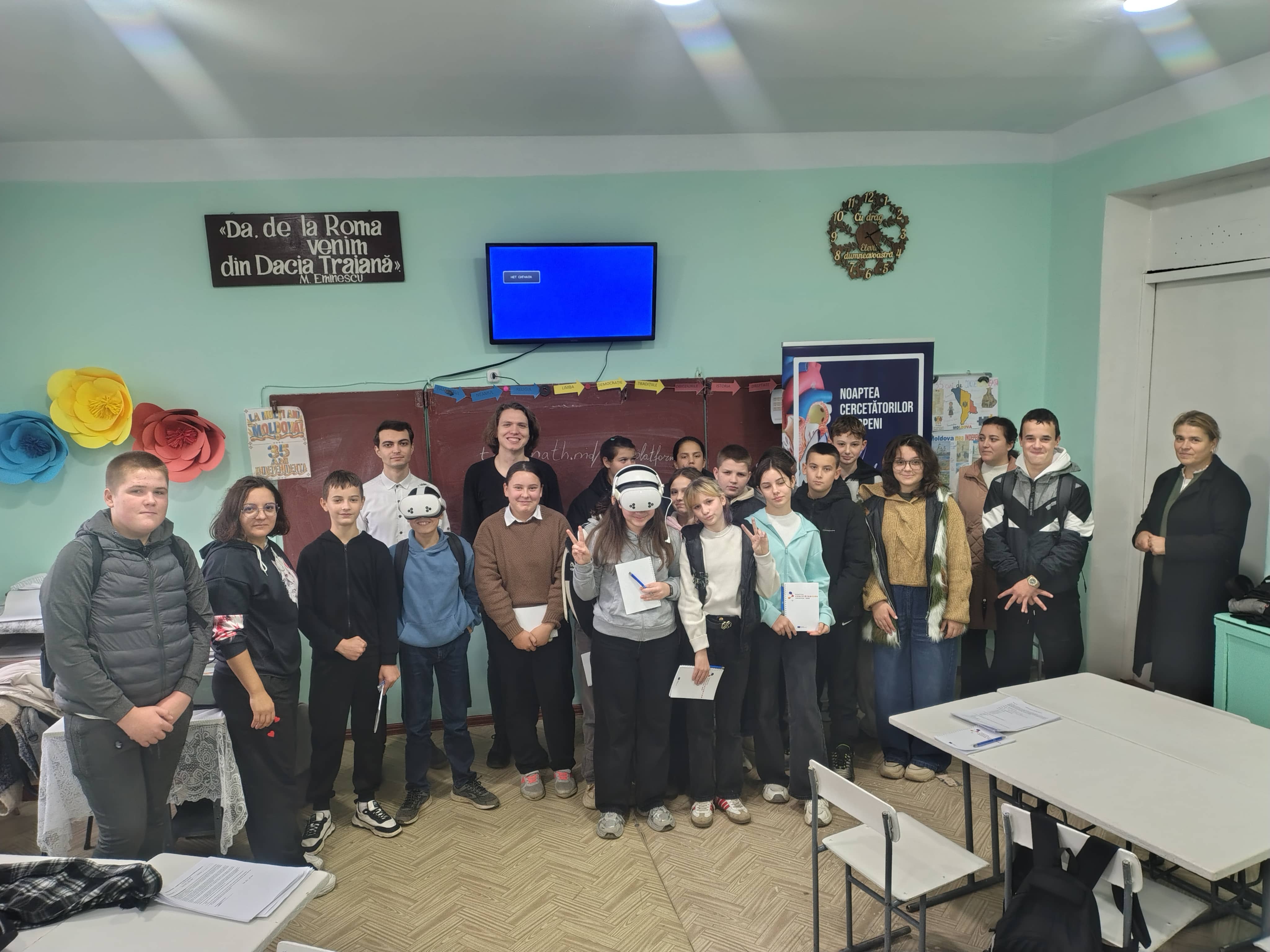
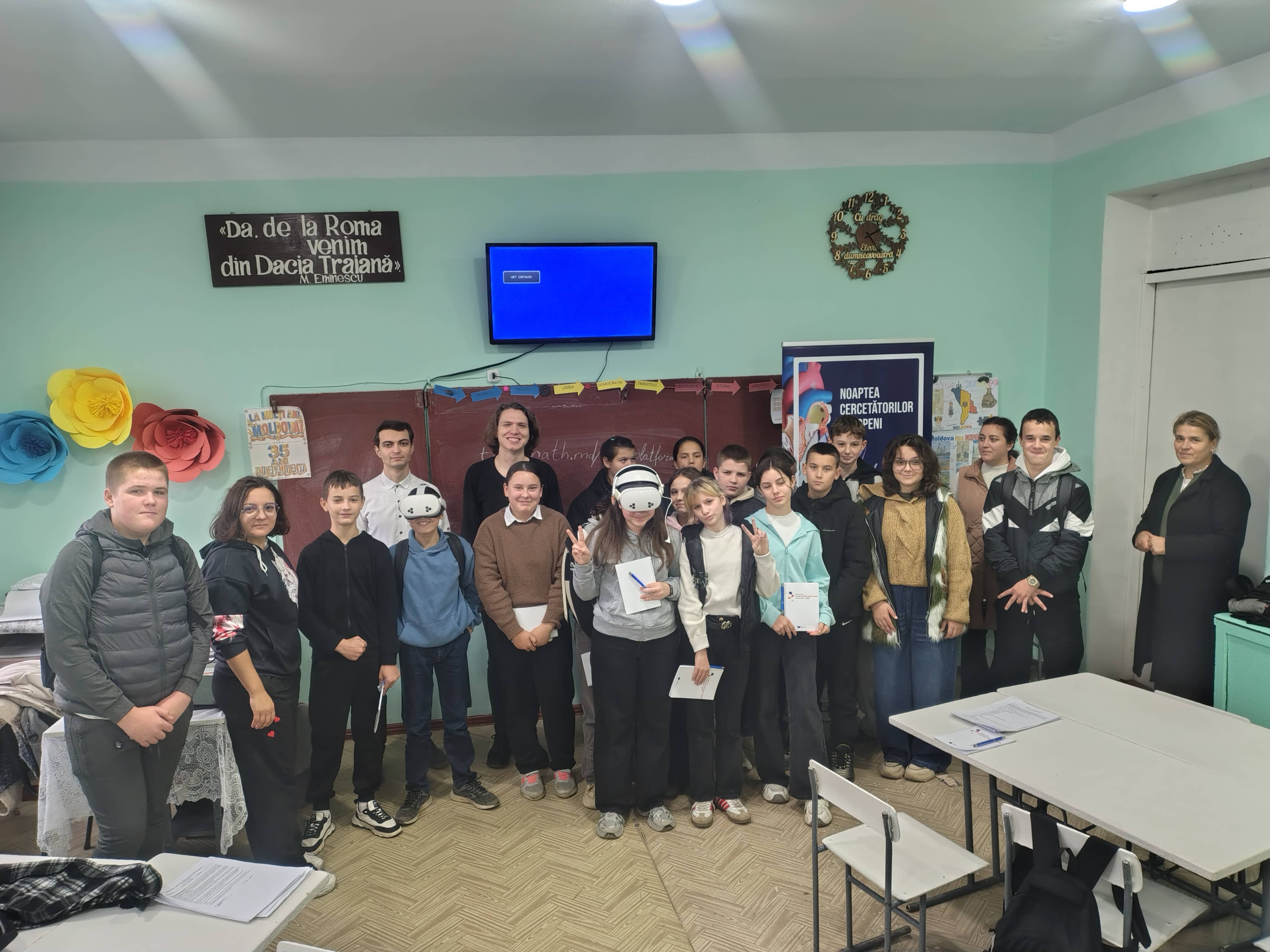
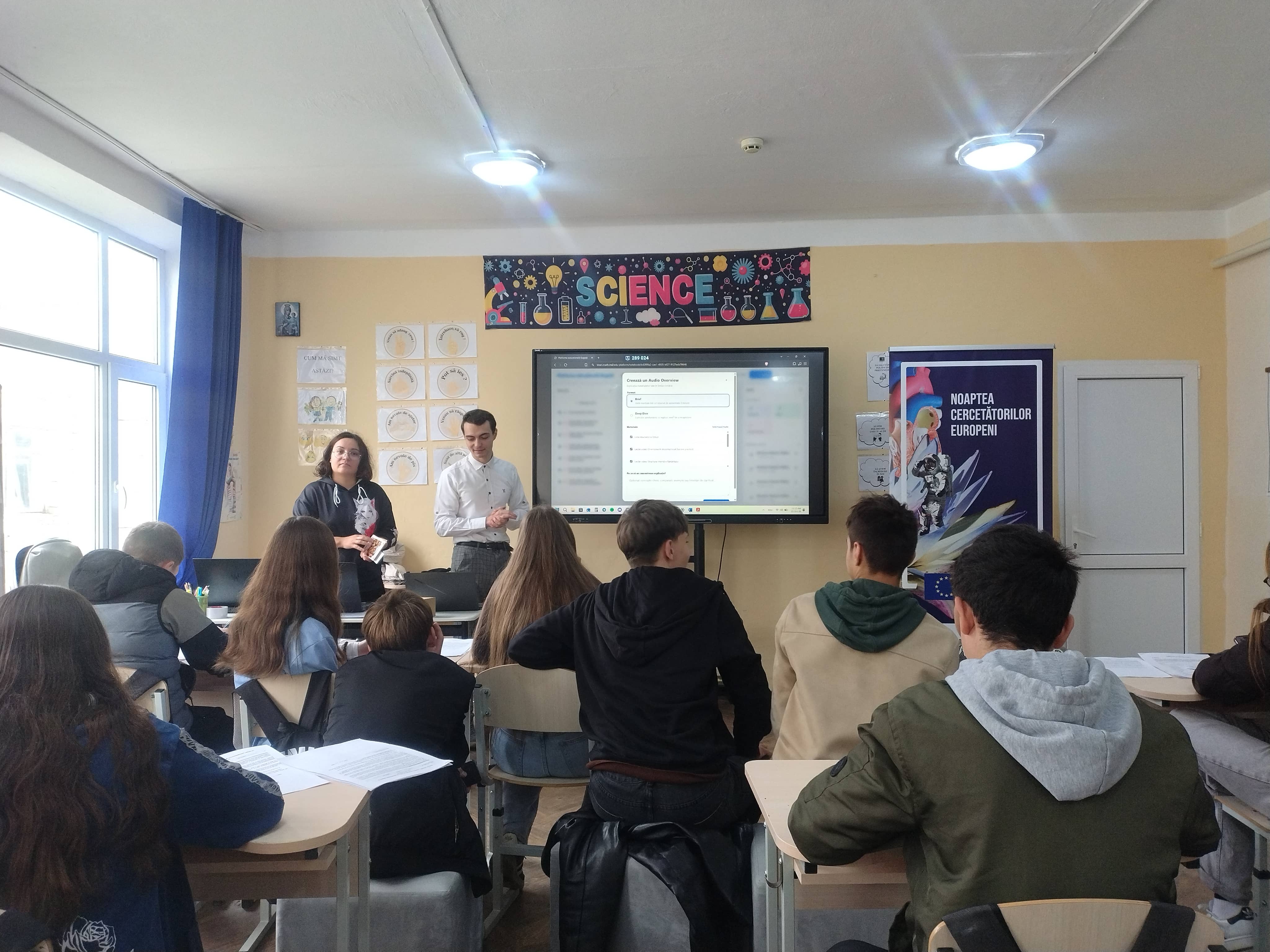
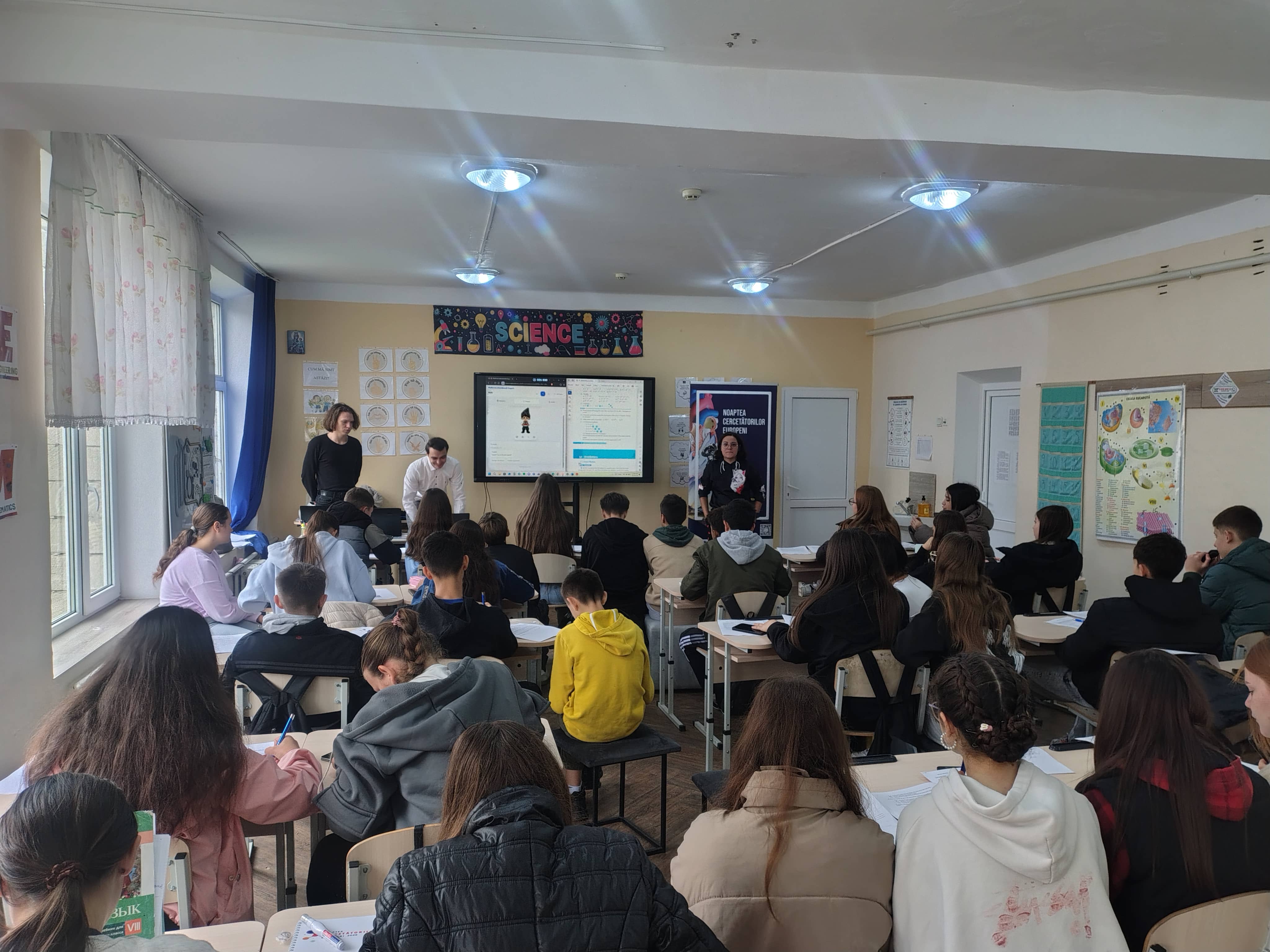
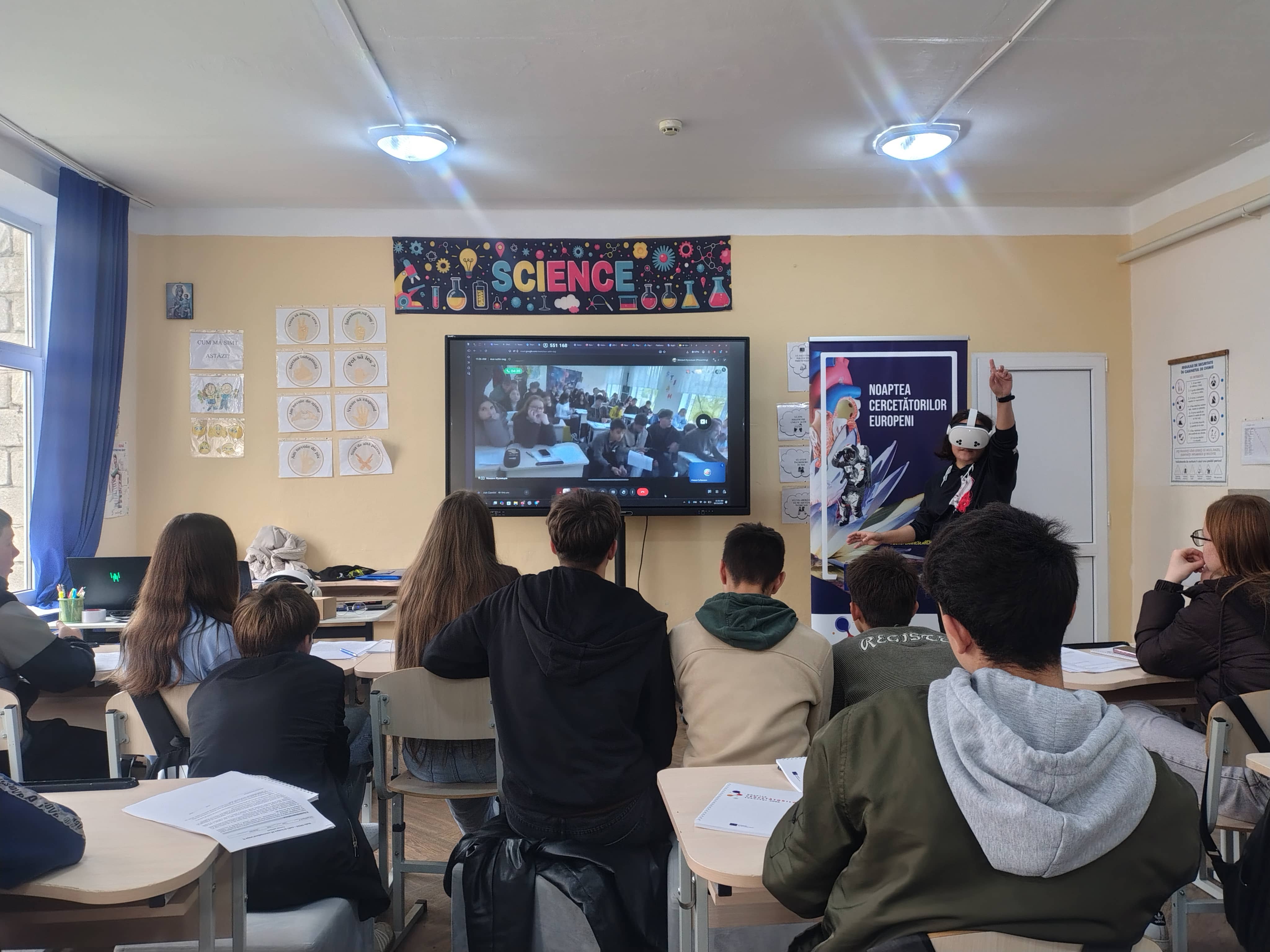
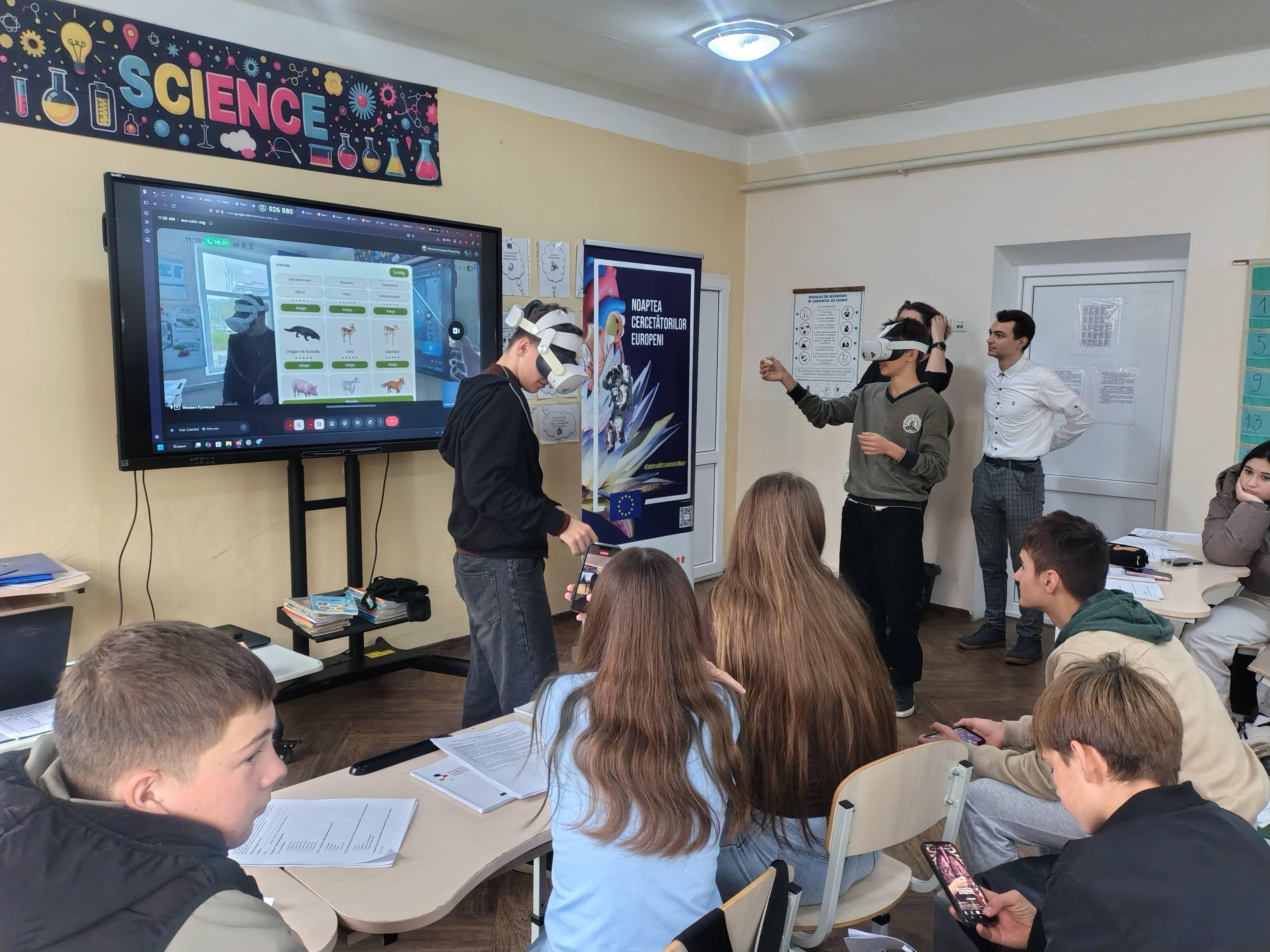
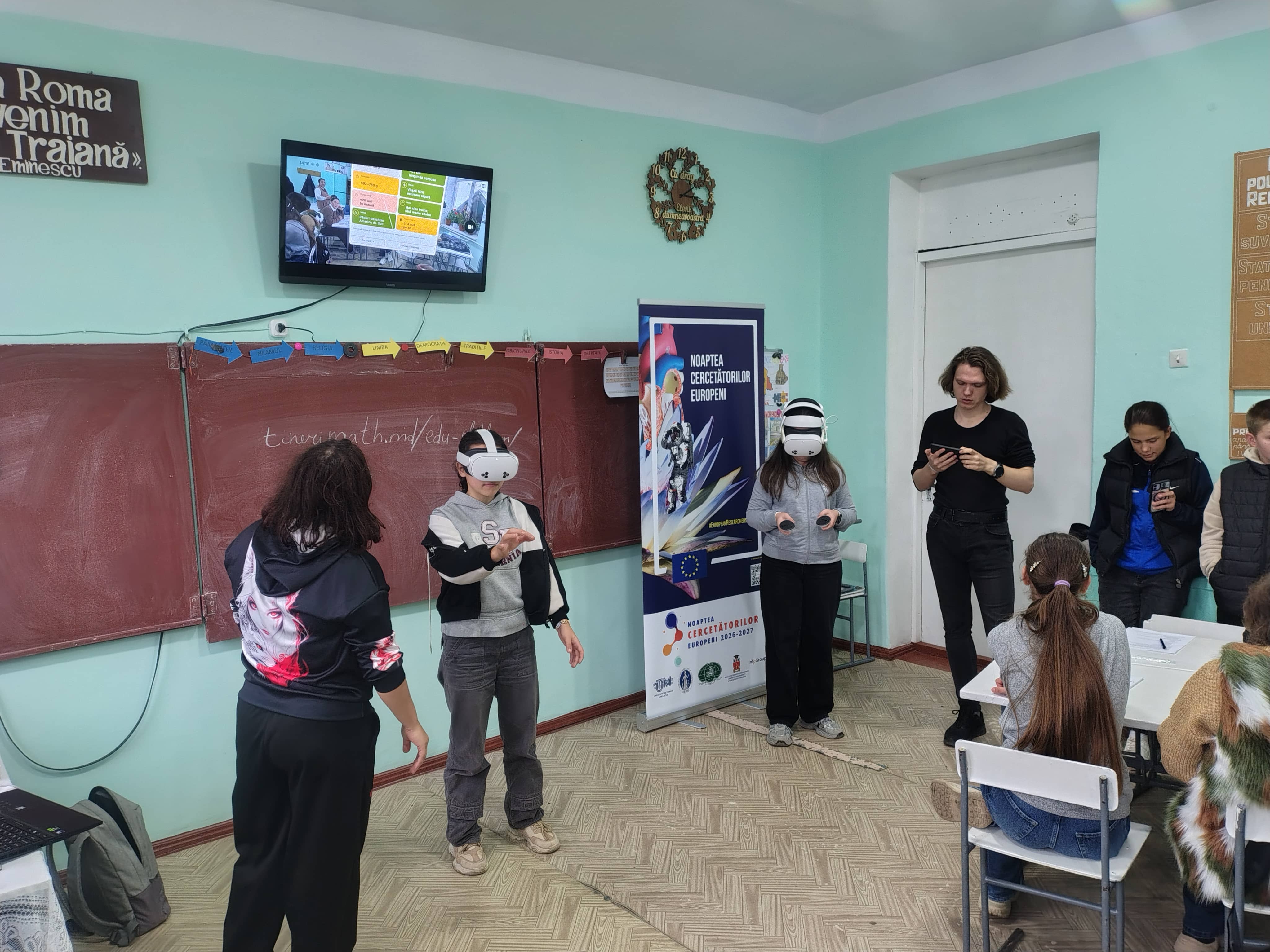
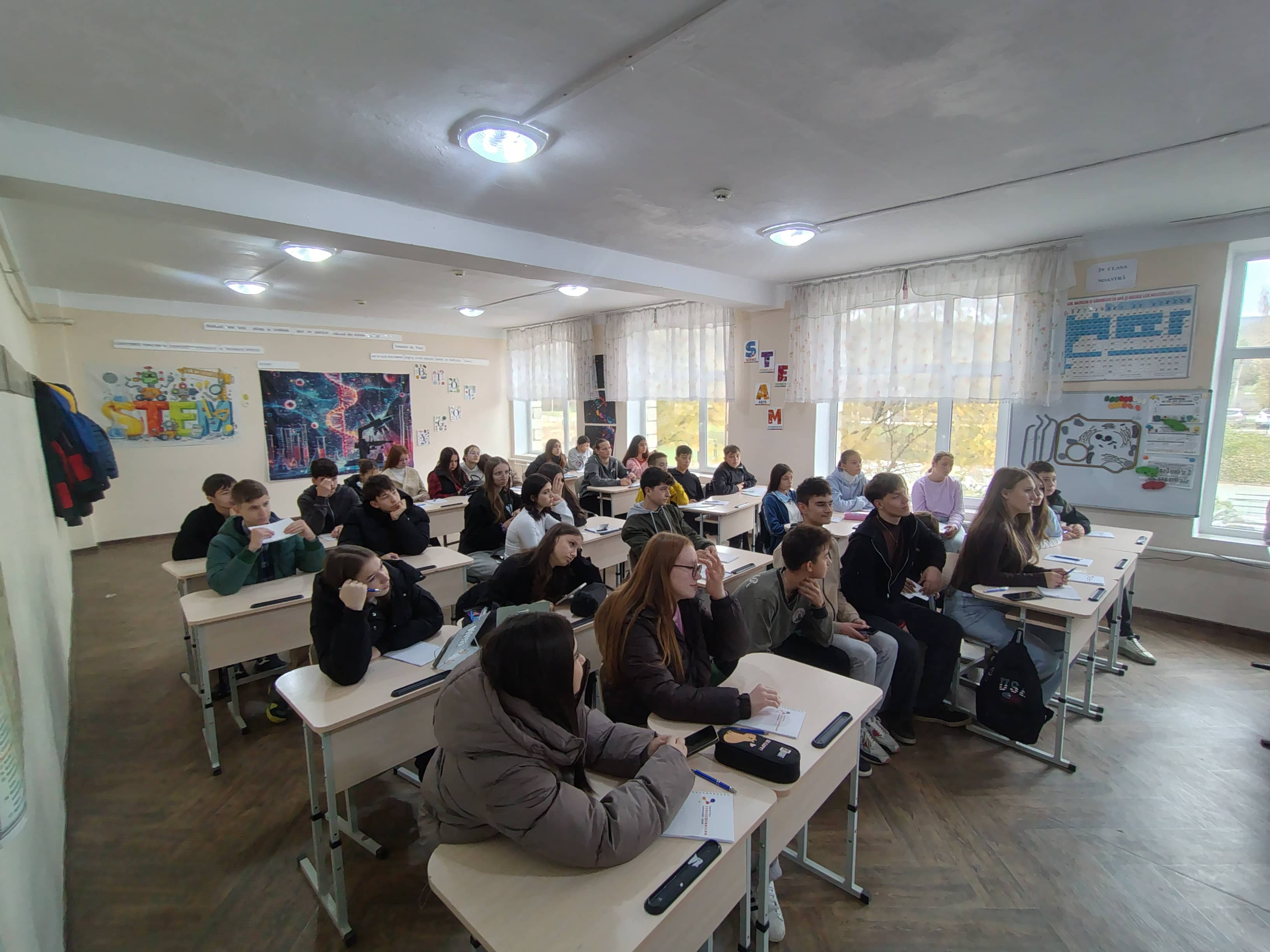
When science leaves the labs and enters communities, ordinary lessons can be transformed into captivating experiences of learning and discovery. On October 23, 2026, more than 50 students in grades 7–9 from the middle school in the village of Bahmut, Călărași District, and the middle school in the town of Cornești, Ungheni District, participated in interactive activities focused on artificial intelligence and augmented reality, alongside a team of young researchers from the “Vladimir Andrunachievici” Institute of Mathematics and Computer Science (IMI) at Moldova State University.
The team, consisting of researchers Olesea Caftanatov, Marius Cerescu and Mihai Cuznetov, gave the students the opportunity to test innovative educational applications that they themselves had developed. The activities were carried out with financial support from the European Commission, through the SCI-Trust project, as part of the “Researchers at Schools” program, in collaboration with the Moldova Young Academy.
An important aspect of this initiative is the direct contribution of local researchers to the development of modern digital tools for education. Despite limited financial resources in the field of research, the team at IMI demonstrates that professionalism, creativity, and perseverance can lead to the creation of original applications, offered free of charge to students and teachers, thereby contributing to expanding access to advanced educational technologies.
The spotlight was on “Guguță,” an AI-based educational platform designed as a conversational virtual assistant. The application allows students to upload textbooks and receive interactive explanations of mathematical concepts or other challenging topics. A distinctive feature of the platform is its ability to adapt communication to regional dialectal variations, making interactions more natural and accessible for users.
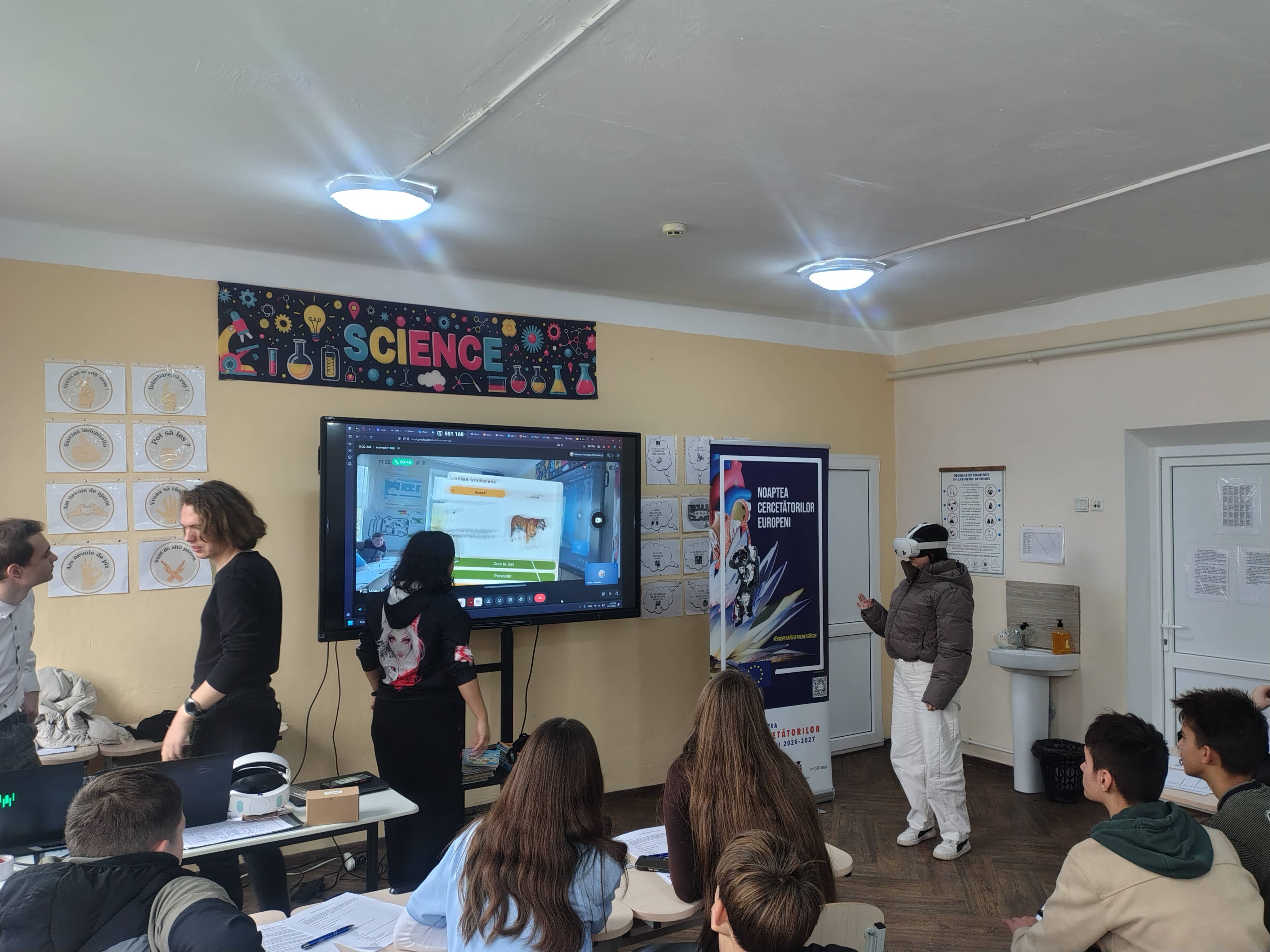
Students also discovered the “CI ARiA” app, which showcases Bessarabian linguistic heritage through augmented reality. Using smartphones and specially designed cards, participants were able to explore interactive digital representations of traditional proverbs and expressions, discovering new ways to combine cultural heritage with contemporary technologies.
At the same time, during a module dedicated to extended reality (XR), students interacted with virtual characters and objects, becoming familiar with the possibilities offered by immersive technologies in the learning process.
A distinctive feature of the activities was the direct dialogue between students and the app developers. Participants did not merely observe the demonstrations; they tested the platforms, asked questions, and offered suggestions regarding their functionality. For researchers, the students’ feedback is a valuable source of information for refining educational tools, and for the students, such encounters can serve as a first step toward discovering a future career in research, computer science, and artificial intelligence.
The dialogue between researchers and students will continue beyond the classroom. In the coming period, students will have the opportunity to visit research laboratories in Chișinău, where they will become familiar with the scientific infrastructure, the stages of digital application development, and the work of specialists involved in research and innovation projects.
The activities carried out in Bahmut and Cornești demonstrate that bringing scientific research closer to the school environment can significantly contribute to the modernization of education, the stimulation of creativity, and the development of young people’s interest in new technologies. Through such initiatives, researchers in the Republic of Moldova not only promote scientific achievements but also contribute directly to shaping a generation capable of making intelligent use of emerging technologies and actively participating in the development of a knowledge-based society.
The activities of promoting research in schools and facilitating students’ access to science labs are carried out with financial support from the European Union, as part of the Sci-TRUST project “Fostering trust in science: European Researchers’ Night” funded through the Horizon Europe program, grant agreement 101305415.
The Sci-TRUST consortium is coordinated by the Technical University of Moldova and includes the Academy of Sciences of Moldova, “Alecu Russo” State University in Bălți, “Nicolae Testemițanu” State University of Medicine and Pharmacy and the InfoGroup NGO.
Source: https://asm.md/
Useful links:
Guguta AI
CI ARiA
Augmented Reality apps